
Operating System
Data breaches cost businesses millions annually—and 94% of cyberattacks start with phishing. These 10 internal safeguards empower cybersecurity leaders to fortify defenses, enforce compliance, and build a culture of data protection that adapts to evolving threats.
Zero-Trust Network Architecture Implementation

Tired of relying on outdated "trust but verify" models that leave your network vulnerable? Zero-trust architecture flips the script by treating every access request—even from inside your firewall—as a potential threat. This approach eliminates the assumption that users or devices are inherently safe, drastically reducing lateral movement risks during breaches.
With continuous authentication, micro-segmentation, and device health checks, zero-trust enforces strict identity verification at every step. Solutions like BeyondCorp by Google or Microsoft Azure AD Zero Trust integrate seamlessly with your existing infrastructure, requiring no rip-and-replace. For hybrid cloud setups, this means real-time policy enforcement across on-prem, SaaS, and public cloud environments—no matter where your workforce is located.
This isn’t just for Fortune 500s: even mid-sized enterprises with remote teams benefit from the reduced attack surface and automated compliance features. Start with a pilot in your most sensitive departments to see the difference. ✨
Automated Endpoint Detection and Response
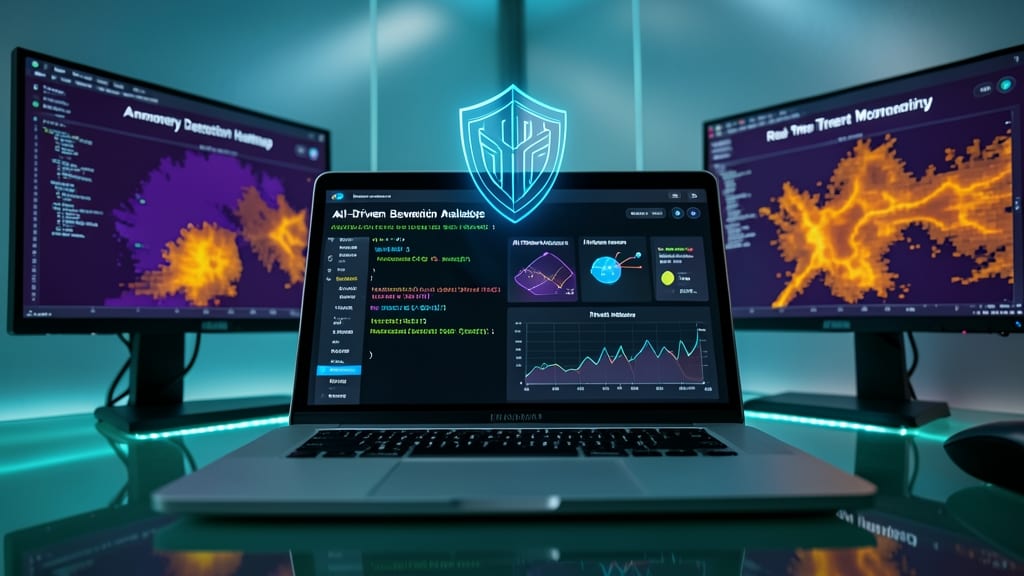
While zero-trust networks focus on network-level security, Automated Endpoint Detection and Response (EDR) takes protection to the device level—stopping threats before they execute. Unlike traditional antivirus, EDR uses AI-driven behavioral analysis to detect zero-day exploits, ransomware, and lateral movement attempts in real time.
Solutions like CrowdStrike Falcon or Microsoft Defender for Endpoint monitor over 100+ telemetry signals per device, including process injection, registry tampering, and unusual data exfiltration. They integrate with SIEM tools for centralized threat hunting and provide automated containment of compromised endpoints within minutes—critical for BYOD environments where personal devices connect to corporate networks.
This is the safeguard for organizations drowning in legacy systems or BYOD policies, where patching delays or user error create vulnerabilities. 💻
Role-Based Access Control for Sensitive Data

When a single misconfigured permission can expose years of patient records or financial transactions, role-based access control (RBAC) becomes your first line of defense. Unlike broad permissions that leave systems vulnerable, RBAC assigns access based on job functions—ensuring accountants can’t modify payroll systems or nurses can’t alter patient treatment plans.
Modern RBAC solutions like Microsoft Azure AD or Okta integrate with least-privilege principles, automatically revoking access when roles change. For healthcare, HIPAA-compliant systems log every access attempt, while financial firms use attribute-based extensions to enforce time-of-day restrictions. These tools reduce privilege escalation risks by 80% compared to static permission models.
Industries handling PHI or PCI data see the biggest ROI—compliance audits become seamless when permissions align with regulatory requirements. Start with an audit of your most sensitive systems to identify overprivileged accounts. 💻
Multi-Factor Authentication for All Systems

Credential stuffing attacks—where hackers use stolen passwords across multiple platforms—are on the rise, but multi-factor authentication (MFA) acts as an impenetrable second line of defense. By requiring a secondary verification step (like a code from an app or biometric scan), MFA thwarts attackers even if they’ve cracked your password, making it one of the simplest yet most effective safeguards for remote teams.
Modern MFA solutions like Microsoft Authenticator or Duo Security integrate seamlessly with VPNs, cloud apps, and internal systems, supporting push notifications, hardware tokens, or SMS codes—giving you flexibility based on security needs. Studies show MFA can block up to 99.9% of automated attacks, and tools like Google’s Titan Security Key even offer phishing-resistant authentication for high-risk roles. The best part? Many platforms now offer zero-configuration MFA for employees, reducing IT overhead.
This is non-negotiable for companies with remote or hybrid workforces, where VPN access is a prime target. Even small businesses benefit—MFA costs pennies per user compared to breach cleanup fees. Start with your most critical systems first. ✨
Data Encryption in Transit and at Rest

Imagine a laptop with customer records left in a coffee shop—or a stolen server containing unencrypted trade secrets. Data encryption in transit and at rest is your last line of defense against these scenarios, turning sensitive data into unreadable ciphertext without slowing down business operations.
Modern solutions like AES-256 encryption (the gold standard for data at rest) and TLS 1.3 (for secure transit) ensure that even if a device falls into the wrong hands, the data remains useless without decryption keys. Cloud providers such as AWS KMS and Azure Key Vault automate key management, while BitLocker and FileVault offer built-in disk encryption for endpoints. For compliance-heavy industries like healthcare or finance, HIPAA and GDPR mandate these protections as minimum requirements.
This safeguard is non-negotiable for any company handling personally identifiable information (PII) or proprietary IP. Start with full-disk encryption for all devices, then layer in transport-layer security (TLS) for cloud communications. The peace of mind is worth the setup. ⚡
Regular Security Awareness Training Programs

Your strongest defense against cyberattacks isn’t firewalls or encryption—it’s your team. Since human error causes 90% of breaches, programs like KnowBe4 or Proofpoint deliver phishing simulations that trick employees into recognizing real threats, slashing click-through rates by 70%. These platforms track individual progress and adapt to evolving attack tactics.
Most programs include quarterly training modules on topics like social engineering, password hygiene, and recognizing malicious links—paired with real-time phishing tests that mimic actual threats. The best solutions integrate with your existing tools, like Microsoft 365, to automate delivery and reporting. For organizations with high turnover, automated onboarding modules ensure new hires get up to speed instantly.
This isn’t just compliance checkbox—it’s a culture shift. Companies like Dropbox and Slack report 50% fewer security incidents after implementing these programs. If your team’s first line of defense is their instincts, training turns them into an impenetrable shield. ✨
Automated Patch Management System

Unpatched software is the #1 entry point for cyberattacks—yet 60% of breaches exploit vulnerabilities that had patches available for months. An automated patch management system closes this gap by deploying critical updates across your entire network within 24 hours, reducing your attack surface before threats even emerge.
Solutions like ManageEngine Patch Manager Plus or SolarWinds Serv-U scan for vulnerabilities in real-time, prioritize fixes based on severity (CVSS scores), and handle deployment across Windows, macOS, Linux, and mobile endpoints—even for legacy systems. They also maintain compliance documentation automatically, saving IT teams hundreds of hours annually. The best systems even include rollback capabilities to restore functionality if a patch introduces issues.
This is a game-changer for IT teams managing 200+ endpoints or supporting remote/hybrid workforces where manual patching is impractical. It’s also essential for regulated industries where audit trails for compliance are non-negotiable. ⚡
Insider Threat Monitoring Solutions

Not all cyber threats come from outside—sometimes, the biggest risks sit right at your conference table. Insider threat monitoring solutions like Exabeam Fusion or Splunk Insider Threat Detection analyze user behavior patterns to flag suspicious activity before it escalates into a breach.
These tools monitor unusual data access (e.g., a finance analyst printing 500 client records at 2 AM), unauthorized privilege escalation, or suspicious cloud activity—all in real time. For financial institutions, where high-risk roles handle sensitive transactions, these systems can detect exfiltration attempts through encrypted channels or unusual email patterns, often before security teams even receive an alert.
Ideal for organizations where trust isn’t enough—like banks, law firms, or healthcare providers—these solutions integrate with existing SIEM tools and require minimal training to deploy. The peace of mind? Knowing you’ve got eyes on the human factor before it becomes your biggest vulnerability. 💡
Incident Response Playbooks for Common Threats

When every minute counts during a breach, having a predefined incident response playbook can mean the difference between a contained event and a full-blown crisis. These structured guides outline step-by-step actions for phishing attacks, ransomware, or data leaks, ensuring your team responds consistently and quickly—without costly hesitation.
Playbooks like those from NIST SP 800-61 or ISO 27001 frameworks include tailored procedures for isolating threats, communicating with stakeholders, and restoring systems. Tools like Splunk Phantom or IBM Resilient automate workflows, reducing breach containment time by 60%—a critical metric for compliance and risk mitigation. Customizable templates ensure alignment with your organization’s unique risks.
Ideal for compliance-heavy industries (finance, healthcare) or any team aiming to meet regulatory deadlines, these playbooks turn chaos into action. Start with a phishing response playbook—the most common threat vector—and scale from there. ✨
Third-Party Risk Assessment and Vendor Management

Your supply chain isn’t just a business process—it’s a critical attack surface that hackers exploit when internal defenses are strong. The 2023 Verizon DBIR found that 43% of breaches involved third-party vendors, yet most organizations still treat vendor risk as an afterthought rather than a core security pillar.
Tools like OneTrust Vendor Risk Management or Prevalent’s Third-Party Risk Platform automate continuous monitoring of vendors’ security posture, from SOC 2 compliance to patch management. You can flag high-risk vendors in real-time—like that cloud storage provider with outdated encryption—or enforce contractual security clauses before signing. The best solutions integrate with your SIEM for unified threat visibility, ensuring no vendor becomes a weak link.
This is non-negotiable for healthcare providers (HIPAA compliance), financial firms (PCI DSS), or any company relying on SaaS tools like Salesforce or Slack. Start by auditing your top 10 vendors—you’ll be surprised what slips through the cracks. 🔧